Entrepreneur Resources Your source for small business information
The journey a prospective student takes from initial interest to enrollment is complex and highly individualized. Today, this journey predominantly begins online. Understanding search intent – the “why” behind a student’s query – is paramount. Are they looking for an online psychiatric NP degree program, exploring career options, comparing financial aid, or seeking campus life information? Each intent requires a custom approach. Unlike general e-commerce, the nuances of student recruitment cycles and program structures require a specialized higher education SEO approach. Our goal is to align your institution’s digital presence with these diverse student needs, ultimately driving toward your enrollment goals.
Keyword Research: Finding What Prospective Students Search For
Effective SEO begins with understanding the language your audience uses. For educational institutions, this means delving deep into the specific terms prospective students, parents, and even faculty use when searching for information.

We categorize keywords into several vital groups:
- Program-specific keywords: These are direct searches for academic offerings, such as “nursing degree programs,” “online MBA,” or “computer science Ph.D.”
- Location-based keywords: Crucial for institutions with physical campuses, these include terms like “universities in [city/state],” “colleges near me,” or “best community colleges [region].”
- Long-tail keywords: These are longer, more specific phrases that often indicate higher intent. Examples include “affordable online data science master’s degree no GRE” or “accelerated BSN programs in Florida.” While they may have lower search volume individually, their collective traffic can be substantial and highly qualified.
- Question-based queries: With the rise of voice search and AI, students frequently ask full questions, such as “What are the requirements for a medical school application?” or “How much does a law degree cost?”
To uncover these valuable terms, we leverage robust keyword research tools. Platforms like Ubersuggest, Semrush, Moz, and Google Keyword Planner allow us to analyze search volume, competition, and related terms. We also pay close attention to Google’s “People Also Ask” section and suggested searches, which offer direct insights into user intent. Keywords can take several forms, each serving a different purpose. Broad keywords, such as “college degrees,” have high search volume and competition and reflect general user intent. Program-specific keywords like “nursing degree programs” indicate moderate search volume and competition, targeting users with a clear interest in a particular program. Location-based keywords, for example, “universities in Boston,” combine moderate search volume and competition with geographic relevance. Long-tail keywords, such as “best online data science master’s degree no GRE,” have lower search volume and competition but show high intent and very specific user needs. Finally, question-based keywords like “how to apply for financial aid” often vary in search volume and are usually informational, making them ideal for FAQ content. By carefully researching and prioritizing these keywords, we can ensure your institution’s content directly addresses the needs and queries of your target audience, making it easier for prospective students to find you.
Content Creation for Education Marketing SEO
Once we understand what prospective students are searching for, the next step is to create high-quality, engaging content that not only ranks well but also genuinely meets their needs. For educational institutions, this means showcasing your unique value, academic excellence, and vibrant community.
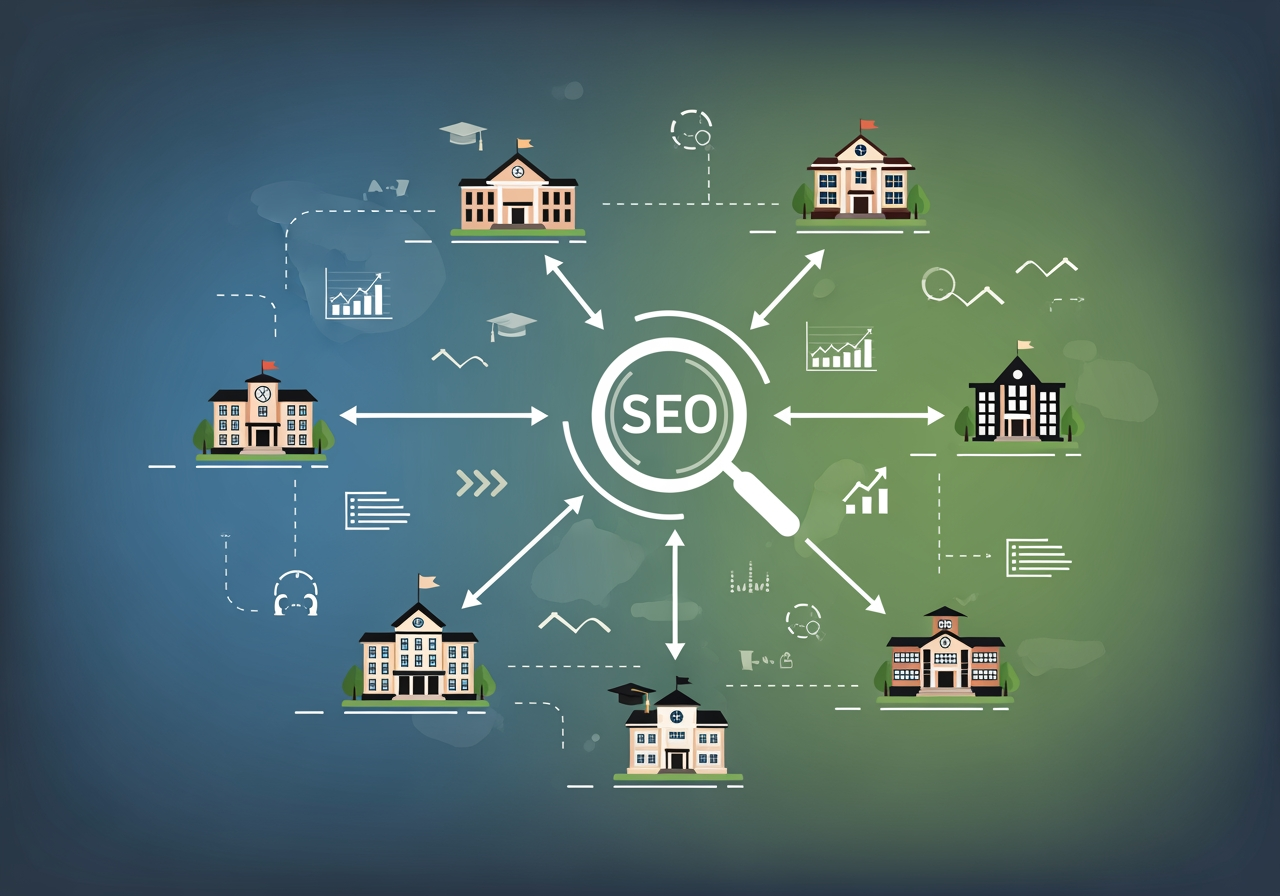
Key content types for education marketing SEO include:
- Program Pages: These are arguably the most critical. Each academic program should have a dedicated, comprehensive page detailing curriculum, faculty, career outcomes, admission requirements, and application deadlines. These pages should be rich with keywords, internal links, and calls to action.
- Faculty Profiles: Highlight the expertise and accomplishments of your professors. Detailed profiles demonstrate your institution’s E-A-T (Expertise, Authoritativeness, Trustworthiness) in specific fields, which Google highly values.
- Student Testimonials and Success Stories: Authentic stories from current students and alumni are powerful. They provide social proof, build trust, and help prospective students envision themselves at your institution. Video testimonials are particularly engaging.
- Blog Posts & Articles: A robust blog allows you to address common questions, discuss industry trends, offer study tips, and highlight campus events. This content can target long-tail and question-based keywords, drawing in students at various stages of their research.
- Virtual Tours & Multimedia: High-quality images, videos, and interactive virtual tours offer an immersive experience, especially for those unable to visit in person. Optimize these assets with descriptive alt text, captions, and keyword-rich titles.
- User-Generated Content (UGC): Encourage students to share their experiences on social media and review platforms. While not directly controlled, UGC contributes to your online reputation and can be leveraged (with permission) on your website.
The content should not just inform but also inspire and connect. It must be well-written, easy to read, and provide clear answers to student questions. Every piece of content is an opportunity to demonstrate your institution’s value and guide a prospective student closer to enrollment.
The Power of Local SEO for Attracting Regional Students
For many educational institutions, particularly community colleges, trade schools, and regional universities, attracting students from the local area is a primary objective. This is where local SEO becomes indispensable. Students often search for programs “near me” or in specific cities, making local optimization a critical component of your overall strategy.

Here’s how we leverage local SEO:
- Google Business Profile (GBP) Optimization: This is the cornerstone of local SEO. We ensure your institution’s GBP listing (and separate listings for multiple campuses) is complete, accurate, and regularly updated. This includes precise addresses, phone numbers, hours of operation, photos, and posts about events or program deadlines. An optimized GBP ensures your institution appears prominently in Google Maps and local pack results.
- Localized Content: Beyond just program pages, we create content specifically custom to local audiences. This could include blog posts about “student life in [city name],” “local internship opportunities,” or “community service projects in [region].” This demonstrates relevance to local searchers.
- “Near Me” Searches: As students increasingly use mobile devices, “near me” searches are prevalent. Optimizing your content and GBP for these queries ensures you capture this high-intent traffic.
- Online Reviews: Encourage current students and alumni to leave positive reviews on your GBP and other education-specific review platforms. Positive reviews boost your local ranking and build trust with prospective students.
- Community Partnerships: Collaborating with local high schools, businesses, and community organizations can generate local backlinks and mentions, further signaling your relevance to the geographic area.
By mastering local SEO, your institution can effectively reach and attract students within its immediate service area, strengthening its community ties and boosting regional enrollment.
Mastering Technical SEO and Website Authority
While compelling content and strategic keyword usage are vital, they can only go so far without a strong technical foundation. Technical SEO ensures that search engines can efficiently crawl, index, and understand your website, leading to better visibility and a superior user experience. This section explores the essential technical elements and the critical role of building website authority through backlinks.
Essential Technical SEO for University Websites
A technically sound website is the backbone of any successful SEO strategy. For universities and colleges, which often have vast and complex websites, these elements are particularly crucial.
- HTTPS Security: Ensuring your website uses HTTPS (Hypertext Transfer Protocol Secure) is non-negotiable. It encrypts data, protects user privacy, and is a confirmed ranking factor for Google.
- Mobile-Friendliness: With the majority of prospective students researching on their mobile devices, a responsive, mobile-first design is essential. Google uses mobile-first indexing, meaning it primarily uses the mobile version of your content for indexing and ranking.
- Page Speed: A fast-loading site is critical for user experience and SEO. Pages should ideally load in under three seconds. We use tools like Google’s PageSpeed Insights to identify and fix issues such as large images, unoptimized code, and excessive redirects.
- XML Sitemaps: An XML sitemap acts as a roadmap for search engines, listing all important pages on your site. This helps ensure that all your valuable content, especially new program pages or research articles, gets finded and indexed.
- Clean URL Structure: Clear, descriptive, and concise URLs (ideally 59 characters or less) that include relevant keywords help both users and search engines understand page content.
- Schema Markup (Structured Data): This is code that helps search engines better understand the content on your pages. For educational institutions, we implement schema for:
- Course: To detail course descriptions, prerequisites, and instructors.
- Event/EducationEvent: For webinars, open houses, and lectures.
- EducationalOrganization: To provide information about the institution itself (name, location, contact, acceptance rate).
- FAQPage/QAPage: To display frequently asked questions directly in search results.
- Core Web Vitals: These are Google’s metrics for real-world user experience, measuring loading performance, interactivity, and visual stability. Optimizing these directly impacts your search rankings.
- Accessibility (WCAG): Ensuring your website is accessible to all users, including those with disabilities, is not only ethical but also improves user experience and can indirectly benefit SEO by signaling a high-quality site.
By carefully addressing these technical elements, we ensure your university website is not only findable by search engines but also provides an optimal experience for every prospective student.
Building Authority with Backlinks and Off-Page Signals
While technical SEO and on-page content optimization are crucial, they are only part of the equation. To truly rank competitively and establish your institution as a credible leader, you need to build authority through backlinks and other off-page signals. Backlinks are essentially “votes of confidence” from other websites, signaling to search engines that your content is valuable and trustworthy.
Our strategies for building authority include:
- Academic Partnerships: Collaborating with other reputable educational institutions, research organizations, and academic publications can lead to valuable backlinks. This could involve joint research projects, shared resources, or co-hosted events.
- Faculty Thought Leadership: Encourage your faculty to publish research, write expert articles, and contribute to industry discussions. When their work is cited or featured on other authoritative sites, it generates powerful backlinks to your institution.
- Alumni Networks: Your alumni are a powerful asset. Encourage successful alumni to link back to their alma mater from their professional websites or company pages when sharing their achievements.
- Digital PR: Proactively engage with local and national media. When your institution is featured in news articles, industry publications, or educational blogs, it often comes with valuable backlinks.
- Scholarship Outreach: Creating unique scholarships and listing them on scholarship directories and financial aid websites can generate numerous backlinks from relevant and authoritative sources.
- Reputable Directories: Ensure your institution is listed in high-quality, education-specific directories and professional associations.
The key is to focus on earning high-quality, relevant backlinks from authoritative sources, rather than pursuing low-quality links. A strong backlink profile not only boosts your search rankings but also improves your institution’s reputation and credibility in the broader academic community.
Adapting to the Future of Search in Education
The digital landscape is in constant flux, with search engines continually evolving. Emerging trends like AI-driven search, voice search, and video optimization are reshaping how students find information. Educational institutions must adapt their strategies to remain visible and relevant. This section explores these trends and how to effectively measure your SEO efforts.
Navigating AI, Voice, and Video Search Trends
The advent of AI is profoundly impacting search. Google’s Multitask Unified Model (MUM) and AI Overviews are changing how information is presented, often providing direct answers without requiring a click.
- Generative AI Overviews: AI chatbots now represent nearly 3% of search engine traffic and are growing. To optimize for this, institutions should focus on creating comprehensive, authoritative content that directly answers common student questions in a conversational format. Implementing schema markup (Course, Event, EducationalOrganization, FAQPage) becomes even more critical, as it helps AI systems understand and present your content accurately. Content should be structured to provide clear, concise answers that AI can easily synthesize.
- Conversational Queries (Voice Search): Voice searchers tend to use natural language and ask full questions. Your content should anticipate these longer, more conversational queries. Optimizing for long-tail, question-based keywords is key. For example, instead of just “MBA program,” optimize for “What are the best MBA programs for working professionals?”
- Video SEO: Students rate video highly as a way to learn about colleges and universities. Optimizing your video content is crucial:
- YouTube Optimization: Use keyword-rich titles, descriptions, and tags for videos hosted on YouTube.
- Transcripts: Provide full transcripts for all videos, making them accessible and allowing search engines to index the spoken content.
- Embedding & Schema: Embed videos on relevant pages of your website and use video schema markup to provide search engines with context about the video content. This can lead to rich results in SERPs, including video carousels.
By proactively adapting to these trends, your institution can ensure its valuable content is findable and impactful in the evolving search environment.
Measuring Success in Education Marketing SEO
Effective SEO isn’t just about implementing strategies; it’s about continuously tracking, analyzing, and refining them. Measuring the success of your SEO efforts is crucial for demonstrating ROI and making informed strategic decisions.
We rely on a suite of tools and key performance indicators (KPIs) to evaluate performance:
- Google Analytics: This remains the foundation for SEO measurement, providing comprehensive data on website traffic, user behavior, and conversions. We track organic traffic volume, user engagement metrics (time on page, bounce rate), and user flow to identify areas for improvement.
- Google Search Console: Complementing Analytics, Search Console shows how your site performs in Google Search results. It reveals which queries prospective students use to find your website, provides data on impressions, clicks, and click-through rates (CTR), and highlights any crawl errors or indexing issues.
- Keyword Rankings: Tracking your institution’s position for target keywords helps assess the effectiveness of your content and optimization efforts. Tools like Semrush or Ahrefs offer advanced rank tracking capabilities.
- Organic Traffic Growth: A consistent increase in organic traffic is a primary indicator of successful SEO. We look for sustained growth over time, not just short-term spikes.
- Conversion Rates: SEO for educational institutions aims to drive enrollments. We track conversion rates for key actions such as:
- Inquiry form submissions
- Application starts or completions
- Download of program guides
- Registrations for campus visits or webinars
- Cost Per Acquisition (CPA): By comparing the cost of your SEO efforts (time, tools, resources) against the number of enrollments generated, you can calculate the CPA and demonstrate the efficiency of SEO as a recruitment channel.
Regular reporting and analysis of these KPIs allow us to understand what’s working, identify areas for improvement, and continuously optimize your SEO strategy for maximum impact.
Frequently Asked Questions about SEO for Educational Institutions
Navigating the complexities of SEO can bring up many questions. Here, we address some of the most common inquiries from educational institutions.
How can smaller colleges compete with large universities in search?
Smaller institutions often face the challenge of competing with the vast resources and established authority of larger universities. However, a focused SEO strategy can level the playing field:
- Focus on Long-Tail Keywords: Instead of trying to rank for broad, highly competitive terms, target niche, specific long-tail keywords that indicate high intent. For example, “accredited online paralegal certificate program” rather than just “law school.”
- Niche Program Marketing: Highlight unique or specialized programs where your institution excels. Create comprehensive, authoritative content around these niches to become the go-to resource.
- Dominate Local Search: For institutions serving a regional audience, aggressively optimize for local SEO. Ensure your Google Business Profile is impeccable, create localized content, and encourage local reviews. Students often search for programs “near me” or in specific cities.
- Build Strong Community Backlinks: Leverage local partnerships, community events, and local media to earn high-quality backlinks from relevant local sources, boosting your regional authority.
By playing to your strengths and focusing on specific, high-intent audiences, smaller institutions can achieve significant visibility and attract qualified applicants.
What are the most common SEO mistakes educational institutions make?
Even with the best intentions, institutions can fall into common SEO traps that hinder their progress:
- Treating SEO as a One-Time Project: SEO is an ongoing process, not a set-it-and-forget-it task. Search algorithms evolve, competitors adapt, and student search behaviors change. Consistent monitoring, updates, and refinements are essential.
- Neglecting Mobile Experience: Given that most prospective students research on their smartphones, a slow, non-responsive, or difficult-to-steer mobile site is a major deterrent and a ranking penalty. Google ranks sites based on their mobile versions, a process called mobile-first indexing.
- Ignoring Local SEO: For institutions with physical campuses, failing to optimize for local search means missing out on a significant pool of regional applicants. An unoptimized Google Business Profile is a lost opportunity.
- Creating Content Without Considering Search Intent: Producing content purely for quantity or without understanding why students are searching for certain terms leads to irrelevant traffic and high bounce rates. Content must align with user intent to be effective.
Avoiding these common pitfalls can significantly improve your institution’s SEO performance and student recruitment efforts.
How does website structure impact higher education SEO?
The way your website is organized and linked together plays a critical role in both user experience and search engine optimization.
- Intuitive Navigation: A clear, logical navigation system helps prospective students easily find the information they need (e.g., academic programs, admissions, financial aid, student life). This improves user experience, reduces bounce rates, and encourages deeper engagement.
- Logical Hierarchy: Your website should have a well-defined hierarchy, with broad categories leading to more specific sub-categories and individual pages. This helps search engines understand the relationships between your content and the relative importance of different sections.
- Internal Linking: Strategic internal linking connects related pages within your site. For example, a program page might link to faculty profiles, alumni testimonials, and application instructions. This distributes “link equity” throughout your site, helps search engines find new content, and guides users through their research journey.
- Helps Search Engines Understand Content Relationships: A strong site structure, reinforced by internal links, signals to search engines which pages are most important and how different topics relate to each other. This aids in indexing and ranking.
- Improves User Experience: A well-structured website is a user-friendly website. Easy navigation and clear pathways to information reduce frustration and keep prospective students engaged longer, increasing the likelihood of conversion.
A thoughtful website structure is an investment that pays dividends in both SEO performance and user satisfaction.
Conclusion
In an increasingly competitive educational landscape, SEO is no longer an optional marketing tactic; it is a strategic investment vital for sustainable enrollment growth. The digital journey of prospective students begins with search, and your institution’s visibility in those crucial moments dictates its ability to attract and engage future learners.
By embracing a comprehensive SEO strategy—from meticulous keyword research and high-quality content creation to robust technical optimization and strategic backlink building—your institution can significantly boost its online presence. Adapting to emerging trends like AI-driven search, voice search, and video optimization ensures you remain at the forefront of digital recruitment.
SEO is an ongoing process, requiring continuous monitoring, analysis, and refinement. It’s about more than just rankings; it’s about connecting with the right students, providing them with the information they need, and guiding them toward a transformative educational experience. By prioritizing SEO, you are not just future-proofing your digital marketing; you are investing in the future success and growth of your institution.