Entrepreneur Resources Your source for small business information
The Core Emerging Technology Trends Reshaping 2025 and Beyond
The technological landscape is undergoing a profound transformation, driven by innovations that not only push boundaries but also fundamentally alter how we interact with the world and conduct business. As we look towards 2025 and beyond, several key trends stand out, each powered by a relentless pace of advancement and interconnectedness.
The Dominance of AI: The Engine Behind Emerging Technology Trends
Artificial Intelligence is no longer just a trend; it’s the foundational substructure of nearly every other emerging technology. We are witnessing AI evolve from simple tools to complex, autonomous systems that redefine possibilities.
One of the most significant shifts is the rise of Agentic AI and Autonomous Systems. These are not just copilots assisting humans; they are intelligent agents capable of autonomously planning and executing multi-step workflows. Imagine an AI agent building, testing, and costing an entire marketing campaign overnight, or logistics firms rerouting hundreds of shipments in minutes. This evolution promises unprecedented efficiency, with a recent survey revealing that 62% of CIOs expect over 100% ROI from agentic AI investments in 2025, with an average expected return of 171%. The autonomous AI market is projected to hit USD 11.79 billion by 2026, growing at a CAGR above 40 percent through 2035.
We are also moving into the era of Generative AI 2.0. What began as creative text or image generation is now expanding into multimodal, domain-tuned systems that combine text, visuals, code, and structured data. This next phase focuses on enterprise-grade integration, moving beyond experimentation to delivering measurable ROI. McKinsey’s Economic Potential of Generative AI suggests that this technology could unlock USD 2.6 to 4.4 trillion in annual value across industries, with 65% of organizations already regularly utilizing generative AI.
Human-AI Collaboration Tools, which are evolving from sidekicks to true teammates, are enhancing decision quality and accelerating complex work. In Google’s 2025 DORA Report, 90% of software professionals reported using AI daily, saving nearly two hours. The AI productivity tools market is projected to reach USD 36.35 billion by 2030.
Domain-specific language models are delivering higher accuracy and compliance for industry-specific use cases, moving beyond general large language models to provide custom intelligence. To effectively harness these powerful advancements, businesses often rely on a comprehensive suite of AI tools for emerging trends that help in identifying, implementing, and optimizing new AI-driven solutions.

The Convergence of Physical and Digital Worlds
The boundaries between our physical and digital realities are increasingly blurring, creating immersive and highly interactive experiences. This convergence is giving rise to a new generation of technologies that promise to redefine how we live, work, and connect.
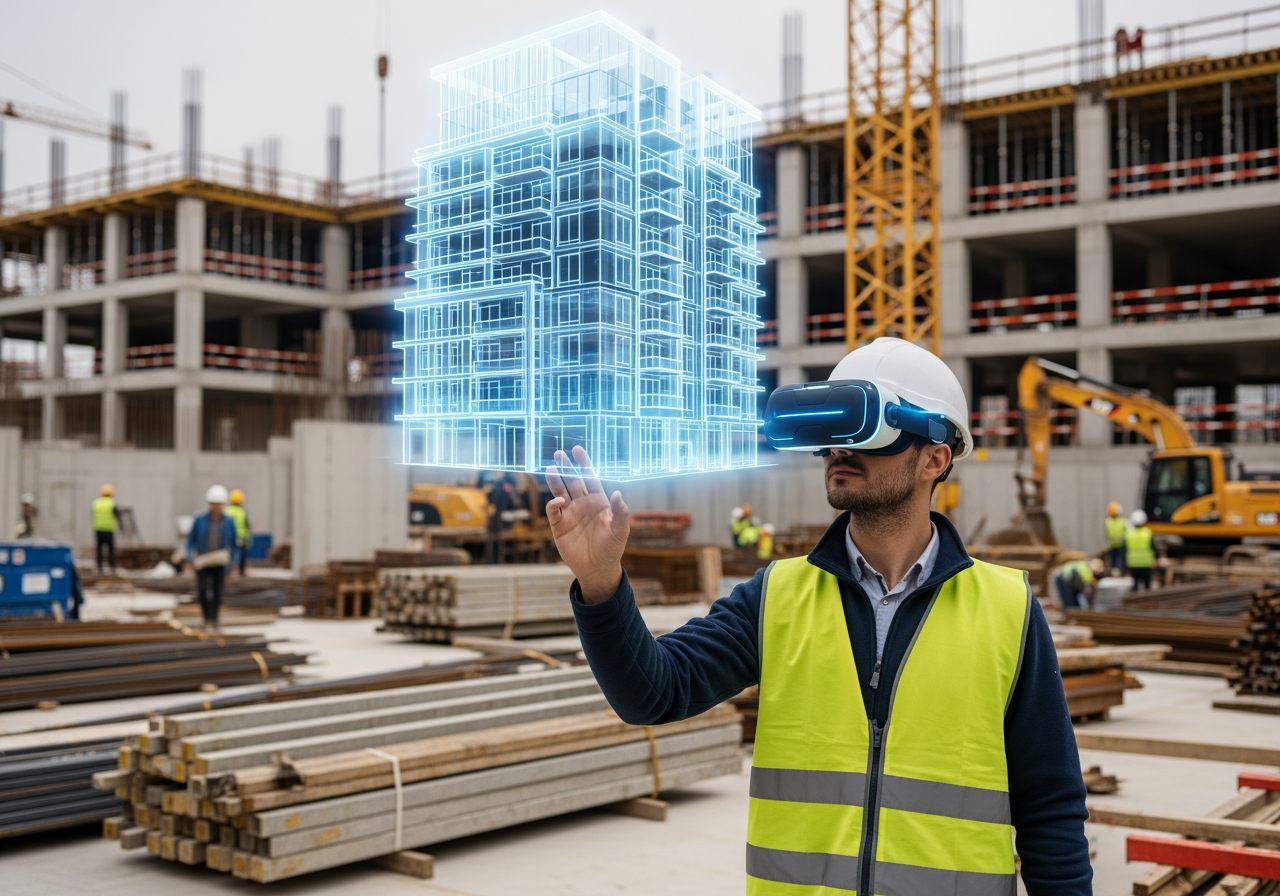
Spatial Computing is taking center stage, blending digital content seamlessly with the physical world. It’s moving from experimental to essential, enabling users to interact with persistently anchored, geoposed content. The market for spatial computing is projected to grow from $110 billion in 2023 to $1.7 trillion by 2033. This technology enables advanced simulations for testing operational impacts, visualizing patient movement in healthcare, and creating virtual walkthroughs of buildings before construction begins.
Closely related is Augmented Reality (AR), which is no longer just a tech demo but is becoming an everyday interface. As AR hardware becomes lighter and software smarter, digital overlays provide critical information to field technicians, doctors, and logistics teams. The global AR market is projected to grow from USD 140.34 billion in 2025 to USD 1,716.37 billion by 2032, at a CAGR of 43%. This is complemented by Digital Twins, which are evolving into “living systems” that integrate real-time sensor data, IoT feeds, and cloud analytics to mirror physical systems dynamically. These virtual models transform the way industries design, monitor, and optimize operations, enabling the simulation of entire factories, supply chains, and even cities to anticipate potential problems. The global digital twin market is expected to grow from USD 21.14 billion in 2025 to USD 149.81 billion by 2030.
Physical AI is bringing intelligence into the real world, powering robots, drones, and smart equipment for significant operational impact. This includes Robotics and Human-Robot Collaboration (Cobots), where robots, once confined to safety cages, now share workspaces with humans, enhancing efficiency and adaptability. Collaborative robots now account for over 10% of all industrial robot installations, signaling their move to mainstream manufacturing. This shift is part of Industry 5.0, which combines productivity with human-centricity, resilience, and sustainability, positioning people as collaborators in intelligent, automated systems. The smart factory market is projected to reach USD 272.64 billion by 2030.
Finally, Edge AI is pushing intelligence closer to the source of data. Devices, ranging from wearables to autonomous drones, now process data locally, reducing latency and cloud costs while protecting user privacy. The global edge AI market is projected to reach USD 66.47 billion by 2030. These advancements are also changing immersive experiences. For those seeking to delve deeper into the evolving landscape of virtual environments, exploring resources dedicated to emerging VR technology trends can offer valuable insights into the hardware and software innovations driving these immersive digital worlds.
Fortifying the Future: Cybersecurity and Trust
In an increasingly interconnected and AI-driven world, cybersecurity and trust are paramount. The sophistication of threats is rising, making robust, proactive defense mechanisms essential for safeguarding digital assets and maintaining stakeholder confidence.
Preemptive Cybersecurity marks a crucial shift from reactive defense to proactive threat blocking. AI is no longer just a tool for attackers; it is now the strongest shield defenders have. Organizations using AI and automation detect and contain breaches 108 days faster and save an average of USD 1.76 million compared to those that don’t, according to IBM’s Cost of a Data Breach Report. AI-driven analytics, paired with zero-trust architecture and strong identity management, are unifying detection and response in real-time across complex digital ecosystems.
Confidential Computing is gaining traction as a vital technology for protecting sensitive data while it’s in use. This allows secure AI and analytics to be performed even across untrusted infrastructure, ensuring that data remains encrypted throughout its lifecycle, including during processing. This is particularly critical for industries dealing with highly sensitive information, such as finance and healthcare.
The looming threat of Quantum Computing necessitates urgent action. IBM predicts that practical quantum advantage could be demonstrated by 2026, and Gartner warns that by 2029, advances in quantum computing will render most conventional asymmetric cryptography unsafe. This poses a severe threat to today’s encryption practices, making the adoption of post-quantum cryptography (PQC) an immediate strategic imperative to future-proof systems and safeguard valuable intellectual property.
Ensuring the integrity and authenticity of digital information is addressed by Digital Provenance. This technology verifies the origin and integrity of software, data, and increasingly, AI-generated content. In an era of deepfakes and sophisticated disinformation, digital provenance is crucial for establishing trust and combating misinformation. Gartner also highlights AI Security Platforms, which centralize visibility and control across third-party and custom AI applications, crucial for managing the risks associated with the widespread adoption of AI.
Finally, Geopatriation is emerging as a strategy to mitigate geopolitical risk by shifting workloads to sovereign or regional cloud providers. This trend reflects a growing concern among organizations to comply with data residency laws and reduce exposure to international political tensions, ensuring data sovereignty and resilience.

Strategic Imperatives for Leadership in the New Tech Era
Navigating this rapidly evolving technological landscape requires more than just adopting new tools; it demands a fundamental rethinking of business strategy, workforce development, and governance. Leaders must accept these changes as strategic imperatives to build resilient organizations and open up new opportunities.
Rethinking Business Strategy for Emerging Technology Trends
For CIOs and IT leaders, the current technological shift presents a mandate to redefine their roles and strategies. AI is changing IT from leading digital change to leading AI change, presenting an opportunity to redefine the future of the IT function itself. This involves not just implementing technology but strategically integrating it to drive core business objectives.
The pursuit of Operational Efficiency and Competitive Advantage is at the heart of leveraging these emerging trends. Businesses can improve decision-making, automate operations, and create superior customer experiences by strategically deploying AI, spatial computing, and other advanced technologies. This results in tangible benefits, including faster deliveries, lower costs, and enhanced customer satisfaction.
Deloitte identifies two critical forces shaping this landscape: Elevating Forces (pioneering innovations) and Grounding Forces (enterprise-critical systems). True success lies in the seamless integration of these two. Pioneering innovations, such as agentic AI and spatial computing, must be integrated with robust, enterprise-critical systems, including cybersecurity, data trust, and core modernization. This holistic approach ensures that innovation is not isolated but contributes to a stable, scalable, and secure operational foundation. This strategic integration is crucial to unlocking the full potential of new technologies. For organizations seeking comprehensive support in this complex environment, Avanti3’s emerging technology guidance can be invaluable in aligning technological advancements with overarching business goals.
Our innovation strategy must therefore focus on intentional intersections between industry and technology. This means looking beyond individual technologies to understand how complementary advancements can accelerate growth and create new opportunities. It’s about striking a balance between centralized scale and localized control, enabling agility while maintaining robust foundational systems. Leaders must identify high-impact domains, invest in talent and infrastructure, and address external factors, such as regulatory shifts, to drive technological change.
Building a Future-Ready Workforce
The rapid evolution of technology, particularly AI, is profoundly impacting the global workforce. The World Economic Forum projects that 23% of current roles will be disrupted by 2027, even as 69 million new, tech-centric roles are expected to emerge. This necessitates a proactive approach to Workforce Evolution, focusing on reskilling and upskilling existing employees and attracting new talent with critical future-proof skills.
The demand for new skills is soaring across various tech fields. Expertise in agentic AI, cybersecurity, data science, quantum computing, and blockchain is topping global hiring lists. Roles like AI Product Manager, Senior AI Engineer, and Cloud Security Architect are among the highest-paying, reflecting the intense need for specialized talent.
A crucial aspect of this change is fostering effective Human-AI Collaboration. The narrative is shifting from human replacement to augmentation, where AI tools accelerate complex tasks, minimize repetitive work, and improve decision quality. Professionals who can blend AI-powered automation with human judgment will lead the next wave of innovation. For example, 90% of software professionals use AI daily, saving nearly two hours, demonstrating the power of this synergy.
To thrive in this environment, organizations must invest in a holistic talent strategy. This includes building entire AI-focused teams, not just hiring individual experts, and prioritizing internal AI training and development. Diversity within AI teams is also proving to be a catalyst for innovation, leading to fresh, out-of-the-box solutions.
Here are five in-demand tech skills crucial for 2026:
- Agentic AI & Prompt Engineering: Designing, deploying, and governing autonomous AI agents.
- AI Security & Governance: Ensuring AI systems are ethical, compliant, and secure from threats.
- Cloud Architecture & Security: Designing and securing scalable, multi-cloud environments.
- Data Fabric & Real-Time Analytics: Managing and extracting insights from vast, disparate data sources.
- Quantum Computing Applications: Developing algorithms and tooling for quantum systems.
Navigating the Governance and Ethical Landscape of New Tech
As emerging technologies become more powerful and pervasive, the imperative for responsible innovation, robust governance, and ethical use grows exponentially. Leaders must proactively address these dimensions to foster trust and ensure the sustainable adoption of their initiatives.
AI Governance is rapidly moving from an optional consideration to an operational necessity. With regulations like the EU AI Act taking effect, companies will be required to demonstrate that every AI model they use is transparent, fair, and accountable. AI governance platforms enable the responsible management and control of AI systems, leading to higher customer trust ratings and improved regulatory compliance. This is no longer just a compliance issue but a competitive advantage.
Data Privacy remains a paramount concern, especially with the explosion of data generated and processed by AI. Privacy-Enhancing Technologies (PETs) offer a solution by allowing organizations to extract insights from sensitive data without ever exposing the raw information. Technologies like homomorphic encryption, secure multi-party computation, and federated learning are crucial for compliant analytics. The PETs market is projected to reach USD 12.26 billion by 2030, driven by regulatory pressure and real-world business needs.
Ensuring Ethical AI Use is fundamental. This involves designing AI systems that are transparent, fair, and accountable, aligning with organizational values and broader societal expectations. It means actively monitoring for biased algorithms, protecting user data, and preventing misuse.
Regulatory Compliance is becoming increasingly complex. Beyond data privacy laws like GDPR, new AI-specific regulations are emerging globally, requiring businesses to steer a patchwork of legal frameworks. Proactive engagement with these regulations is essential to avoid penalties and build a reputation for responsible technology deployment.
Furthermore, many emerging technologies have Dual-Use Implications, meaning they can be applied for both beneficial civilian purposes and potentially harmful military or surveillance uses. This is particularly relevant for technologies such as advanced AI, quantum computing, and directed energy weapons, as highlighted by organizations like the Department of National Defence (DND) and the Canadian Armed Forces (CAF) in their reports on emerging technologies. Understanding these implications is crucial for defense, public safety, and national security, requiring careful consideration of responsible development and deployment.
Building Trust is the gatekeeper to widespread adoption. This encompasses digital provenance, ensuring the authenticity and integrity of digital content, and geopatriation, which addresses data sovereignty and geopolitical risks. By prioritizing ethical considerations, robust governance, and transparent practices, organizations can foster confidence among users, regulators, and the broader public, paving the way for a more secure and responsible digital future.
Conclusion
The journey into the future of technology is exhilarating, marked by unprecedented innovation and transformative potential. From the ubiquitous influence of AI, reshaping everything from development to operational autonomy, to the seamless fusion of our physical and digital worlds through spatial computing and intelligent robotics, the pace of change is relentless. Simultaneously, the critical importance of robust cybersecurity, data privacy, and ethical governance underscores the need for responsible innovation.
For businesses and leaders, this era demands agility, foresight, and a strategic commitment to integrate pioneering innovations with enterprise-critical systems. By understanding these emerging technology trends, investing in a future-ready workforce, and navigating the ethical and regulatory landscape with integrity, we can not only adapt but thrive in the next wave of digital innovation. The future is not just happening to us; we are actively building it, one intelligent system and immersive experience at a time.