Entrepreneur Resources Your source for small business information
Back in the old days, meaning before 2010, if you wanted to show clients a prototype of a product you were working on, you had to think very carefully about what you exhibited. The worry was always that customers would get freaked out if you produced something too radical and groundbreaking. Often, entrepreneurs would hit a brick wall, where clients would keep asking them how a particular design was useful for their customers, simply because of how different it looked.
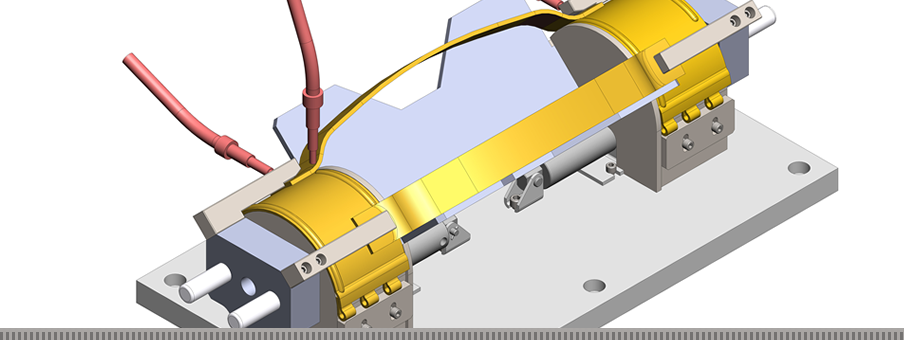
Today, though, things are a little different. Thanks to RIM moulding, 3D printing and computer software, the process of developing a prototype is far less involved and expensive. Revealing a prototype design isn’t a one-shot event anymore. In fact, things are now so much cheaper that many companies are able to offer clients multiple designs.
What’s cool about this is that it is changing the nature of the negotiation process. Forward-thinking companies no longer have to perform a balancing act between producing the prototype they want to create on the one hand and designing a prototype their clients will accept on the other. Instead, they have the ability to slowly iterate their previous designs, showing customers the added value derived from each additional design element. It’s a little bit like the frog in the slowly warming pan of water. Put boiling water in the pan straight away, and the frog will immediately leap out. Raise the temperature more slowly, and the frog will happily sit there until it dies.
Here are some of the reasons why you need rapid prototyping.
You Can Include Changes On The Fly
When you show a customer a prototype of a product, they’ll immediately let you know what they like and what they don’t. Under the old prototyping system where things were slow, making changes was time-consuming, and it could often be months before you could show a client a revision. With rapid prototyping, that’s no longer the case. Businesses can incorporate changes very quickly in reaction to what people in the market think. With each iterative step, product designs can be improved and both the business designing in, and the customer buying it can be confident that the end product will meet their needs.
Lowers The Chances Of Design Flaws
Rapid prototyping means that it suddenly becomes a lot easier to test products while they are in the prototype stage. All too often a product is scheduled for mass production, only for consumers to find out that the product has fundamental flaws once it has gone to market. Disposable prototypes that can be handled and tested by consumers under real world conditions help to iron out weaknesses in design before a company commits to full-scale production.
Saves You Time And Money
Businesses, especially new startups, often have to operate on a strict schedule. Investors want to make a return on their investment, and they expect the companies under their wing to adhere to their timetable.
Old-fashioned prototyping took weeks, if not months, to carry out and so companies often found themselves up against tight deadlines which they sometimes couldn’t meet. Rapid prototyping cuts down on time and reduces the cost of materials to prototype a new product.