Entrepreneur Resources Your source for small business information
As organizations navigate tighter budgets and evolving workforce demands, HR leaders are being asked to do more with less. Reducing labor costs has become a priority across many industries, particularly in manufacturing, construction, and logistics, where payroll represents a large share of operating expenses. At the same time, safety, engagement, and retention cannot be treated as secondary concerns. The challenge is finding strategies that lower costs without increasing risk or burnout.
For HR teams, success lies in approaching cost reduction as an efficiency and design problem rather than a simple headcount exercise. When systems, training, and planning are aligned, organizations can control expenses while strengthening workplace safety and performance.
Creating Consistency Through Process Design
Clear, standardized processes form the foundation of efficient labor management. When employees understand expectations and follow consistent workflows, productivity improves and mistakes decrease. Standard operating procedures, visual guides, and task checklists reduce confusion, shorten learning curves, and create safer work environments.
HR leaders can work alongside operations teams to review existing workflows and identify areas where inconsistency leads to delays, rework, or safety incidents. Simplifying and standardizing these processes supports smoother operations and lowers the hidden costs associated with errors and injuries.
Strengthening Skills Through Ongoing Training
Training is one of the most effective tools for controlling labor costs over the long term. Employees who are properly trained tend to work more efficiently, make fewer mistakes, and experience fewer injuries. While onboarding is critical, learning should not stop there.
Ongoing training programs that address safety updates, new equipment, and cross-functional skills help build a more capable and flexible workforce. From an HR perspective, continuous development also supports retention, reducing the high costs associated with turnover and repeated hiring cycles.
Using Automation to Support, Not Replace, Workers
Automation continues to reshape how work gets done, particularly in labor-intensive environments. By automating repetitive, physically demanding, or high-risk tasks, organizations can improve safety while reducing reliance on manual labor for low-value activities.
HR plays a key role in helping teams understand that automation is about role evolution, not workforce reduction. When machines handle routine tasks, employees can focus on higher-impact work that requires judgment, collaboration, and problem-solving. This shift improves productivity while protecting workers from unnecessary strain.
Applying Lean Principles to Workforce Planning
Lean thinking encourages organizations to focus resources where they create the most value. For HR, this means aligning staffing levels with actual demand rather than assumptions or legacy practices. Reviewing production data, service volumes, and seasonal trends helps teams avoid overstaffing and excessive overtime.
Flexible staffing models, such as adjusted shifts or part-time roles, can further support cost control while maintaining coverage. When labor planning is grounded in real data, organizations are better positioned to respond to changes without sacrificing safety or quality.
Improving Scheduling and Time Management
Scheduling practices have a direct impact on labor costs and employee well-being. Poorly managed schedules often lead to unnecessary overtime, fatigue, and higher injury risk. Regular schedule reviews, combined with workforce management tools, help HR teams monitor hours, maintain compliance, and make timely adjustments.
Smarter scheduling supports both financial goals and employee health, creating more sustainable workloads and reducing stress across teams.
Using Digital Tools to Increase Visibility
Digital platforms give HR leaders greater insight into workforce performance, training completion, and scheduling efficiency. Centralized systems reduce administrative burden and make it easier to identify trends, address issues early, and allocate resources effectively.
With better visibility, HR teams can move from reactive problem-solving to proactive planning, supporting safer operations and more efficient labor use.
Building Long-Term Resilience Through HR Leadership
Balancing labor cost reduction with safety is not a short-term exercise. It requires thoughtful system design, consistent communication, and collaboration across departments. HR leaders are uniquely positioned to connect people strategies with operational goals.
By focusing on process consistency, skill development, smart automation, and data-driven planning, organizations can reduce costs while creating safer, more resilient workplaces. The result is a workforce that supports both financial performance and employee well-being, positioning the business for sustainable success.
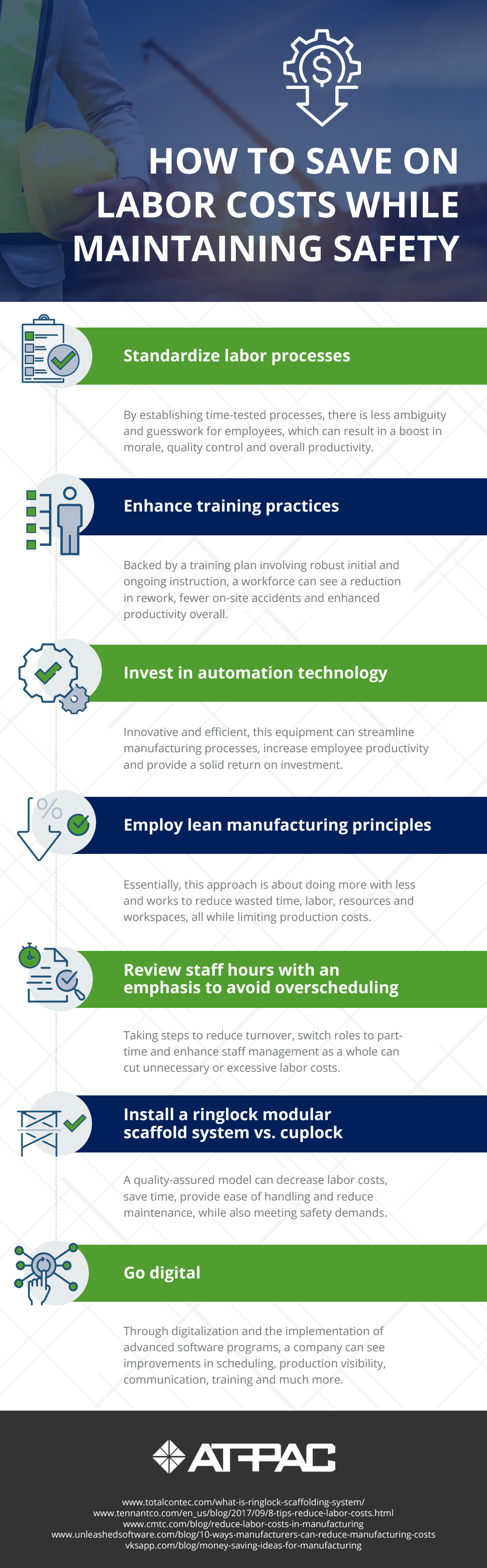
For more on this, check out the infographic below from Atlantic Pacific Equipment, a provider of scaffolding rental services.