Entrepreneur Resources Your source for small business information
All told, we spend more of our waking hours at work than anywhere else. Through the course of a year, we can expect to spend anywhere up to 1,700 hours at work, and that’s only the core hours we spend. Many of us work more than that and our long hour’s culture is worsening.
On account of the number of hours we spend at work, it’s vitally important to protect our well being while we are there. One thing that can critically impact on our health at work is the posture that we assume while we’re there.
What is the correct posture?
The way that you achieve the correct posture will be different depending on the type of work that you do. People standing for long periods, such as during bar work and in retail, will naturally tend to slouch after a time and tend to carry their weight more over one foot than the other. This is not ideal in the long term for health.
Jobs that involve long periods in a seated position such as driving and office roles come with different postural hazards. Slouching is still an issue, but hunching over and sitting with legs not straight can have an impact on creating aches, pains and dysfunction in the body overall.

The correct posture should always be as close to neutral as possible. For standing, this means standing erect with weight evenly distributed over feet placed hip-width apart. In a seated position, a straight back and feet planted firmly on the floor or an appropriate footrest will prevent many problems associated with poor posture.
The problems of poor posture
There are many health problems that can arise from incorrect posture at work. Joint and musculoskeletal problems are the most common, including back and neck pain. It’s estimated that around 7.6 million working days are lost each year due to back pain, and this doesn’t count the impact on the ability to care for children and participate in leisure activities.
The muscular tension arising from incorrect posture can also contribute to chronic headaches. Tension headaches can persist for days or even weeks at a time, which also have a huge knock-on effect on the ability to go about one’s daily life.
Working at a computer brings with it a whole range of additional issues including repetitive strain injury, wrist and shoulder problems from sitting incorrectly, over-reaching or moving more than is necessary to carry out a task.
Solutions
For roles that mostly involve standing, the ability to improve posture lies predominantly in the hands of the individual. However, training on how to move and handle heavy or awkward objects can have an impact on the likelihood of poor posture turning into injury at work.
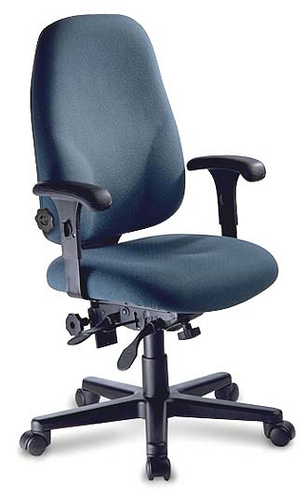
There are significant improvements that can be put in place to enable employees working at desks and computers to improve their posture and protect their health. Ergonomics have brought great advances in ensuring offices are designed in such a way as to minimize the harmful impact of sitting in front of a screen all day.
A chair of the correct dimensions, a desk at the right height and the design of the work station to place everything within easy reach can make all the difference when working at a desk all day. It is also important to make sure that regular breaks from the desk to move around are built into the day. Moving the body helps to relieve muscular tension that can build up from repeated motion and unnatural positions.
Conclusion
Ensuring correct posture at work is extremely important for productivity, health and wellbeing of individuals. Employees should be trained and educated to assume the correct posture at their work and employers should make every effort to provide appropriate equipment to enable workers to remain fit and healthy.
Image Credits: Dreaming in the deep south and Kare_Products
Author bio: The importance of the correct posture is a sentiment shared by all those at Alphabet Secreterial, transcription specialists.