Entrepreneur Resources Your source for small business information
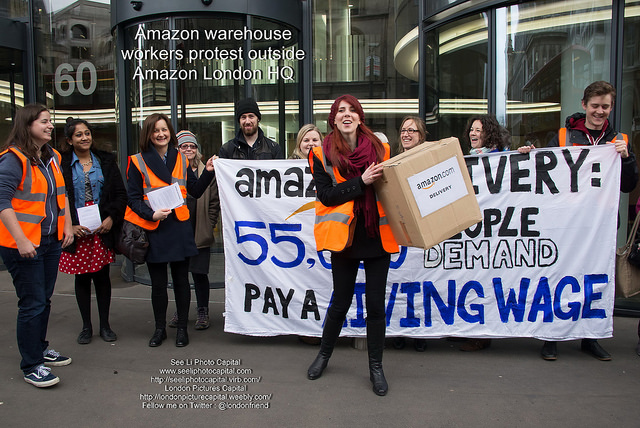
We’ve all heard the horror stories coming out of businesses like Amazon and Hubspot, about how employees are abused and mistreated, to be discarded at a moment’s notice by a management team who seems to be utterly disengaged from the economic realities and fears of their employees. Little, it seems, has changed since the 1800s, with the exception perhaps of some bizarre job perks, like fantasy football, or futuristic jargon about how work makes people better. The reality of working for some of these big tech companies, despite their progressive overtures, is that the hours are long and employees are miserable. The first thing most workers do, as soon as they get a chance, is jump ship.
It should be pointed out that not all companies are like this, especially in the tech sector. Google and Tesla frequently top the charts when it comes to workplace culture satisfaction. But the experience of some of these new firms is an opportunity for small businesses to ask themselves questions about their modern work approach. Yes, Amazon has been successful. But arguably Google has been more successful, and their work cultures couldn’t be more different. Amazon seems as if it actively hates its employees, while Google will spare no expense.
Human Beings Are Social Creatures
Small businesses need to recognize that people are social animals. They’re not just another input to business – not like a piece of capital anyway. And for people in the labor market, it’s not all about costs, productivity, and efficiency. Small businesses want this, but they also need to be able to cater for the human element if they are going to be more like Google and less like Amazon.
 Flickr
One of the things that they can do is embrace the social nature of the workplace and make their employees more productive using the carrot rather than the stick. Solitary confinement is so bad for humans that it is now considered by many experts to be a form of torture. Now research has shown that there is a strong link between things like EAP counseling services and physical and mental well-being. And this is why so many agencies and small businesses are focusing more on the social aspects of their work. They don’t want people to be separated from the other individuals who work with them: they want to create a supportive network where those with multiple employers can thrive.
Repay Loyalty
The sad thing about the labor market today is that we see the end of loyalty. According to Professor Denise Rousseau from Carnegie-Mellon University, the idea of reciprocity within a company, where employees are loyal to the company and the company is loyal to employees in return, is a thing of the past. According to a paper she wrote, more than half of the people interviewed had had their “implicit and explicit psychological contracts” violated by the companies that they worked for. In other words, companies had not kept to their word and were behaving like Amazon, seeing workers as disposable, which does not make for a good workplace culture.
Researchers from the Virginia Business school found more evidence that a lack of loyalty is bad for companies. Peter Belmi and others found that employees were motivated to reciprocate favors, depending on the type of organization they were in. If they saw themselves as being in a personal context, they did reciprocate and gave back to people who had helped them in the past. But if they thought that they were just a part of a big machine, they didn’t bother.
The lesson here for small businesses is clear: being loyal to employees – especially those who add a lot of value – pays in the long term because those employees will try to reciprocate. The key to making this happen, of course, is to engender personal loyalty, rather than emphasizing loyalty to the organization or the business. Show employees favor, and the evidence is that they’ll show favor back to you.
Look For Alternatives To New Work Arrangements
The new economy, where workers are employed on a job-by-job basis, is not actually a new thing. Instead, it goes all the way back to when cottage industries and farms hired labor on a piecemeal basis. According to researchers from UCLA, the modern working practice of having a fixed salary and job emerged when enlightened employers realized that job-by-job working relationships produced high turnover rates. We seem to be going back to that now, which might actually turn out to be bad for small businesses.