 Entrepreneur Resources Your source for small business information
McDonald’s, Starbucks, Volkswagen; they’re not the only player in their chosen game, they’re not even necessarily the best. They don’t necessarily have the better product, the better customer service or the nicer brick and mortar stores than their competitors. It’s not even because their business practices are inherently better than those of their peers. Where they do have their competitive advantage, however, is in their understanding of branding. Each has a logo that’s a carefully considered and oft-revised piece of graphic art. Each has a slogan that’s etched in the public consciousness and each has built a ubiquitous presence in their chosen business landscape. Of course, if the likes of Enron have taught us anything it’s that no business is too big to fail, but it’s a safe bet to say that these three titans aren’t going anywhere any time soon.
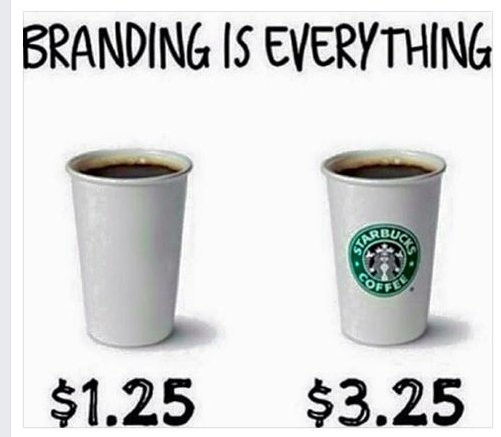
Why Branding is Everything
When you first started building your business plan, your advisors, colleagues and friends likely hammered home the importance of branding. Make no mistake, branding is everything. It’s what enables Starbucks to charge over $5 for a latte when a local cafe will charge less than $3. Before we get into the common mistakes that businesses make in their branding and what you can do to avoid them, it’s important to understand the psychology of brand recognition, how businesses are able to make it work and how you can make it work for you.
The best brands create finely attuned associations with lifestyle choices that they know their target demographics want to emulate or aspire to, even if they have absolutely no association whatsoever with their products. Look at any advert for McDonalds or Coca Cola. You’ll see groups of fit, healthy, attractive young people in open spaces having a great time in their sun dappled surroundings. These are processed fatty, salty, sugary foods and drinks that have been directly linked to a growing obesity epidemic in the developed world. Even the shocking and eye-opening documentary Super Size Me couldn’t damage McDonald’s reputation (though they did make some lasting changes to their menu, introducing more healthy options). Even in the face of overwhelming evidence, people choose to believe in the beautiful fictions of these brands’ masterfully conducted marketing campaigns That’s the power of branding, kids!
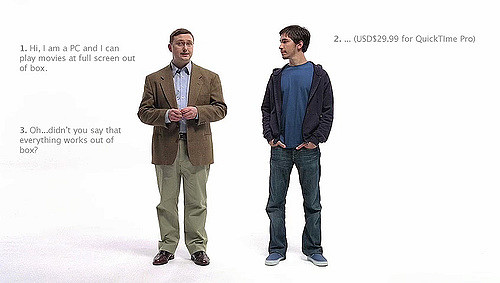
Whether they’ll admit it or not, consumers make emotionally driven purchasing decisions, and these emotions drive the ways in which they evaluate brands. That’s why the best advertising campaigns aim for the heart, not the brain. Even if you’ve compiled a comprehensive list of demonstrable reasons why your product is superior to your competitors’ there’s less value in this than in a series of images and musical cues that cut right to the emotional quick. Case in point; consider Apple’s “I’m a Mac and I’m a PC” campaign. This juxtaposed a stuffy, conservative looking PC user with a cooler, trendier Mac user. While both protagonists were waxing lyrical about why their product best fits their demographic, the real language of the text was far more subliminal. The facts and figures were practically irrelevant. The important message was “Mac= cool, trendy, fun”, “PC= old, outdated, constrained”.
As we see, facts and accuracy take a back seat, good branding rests in creating positive, emotionally led associations.
Sounds simple right? But it’s not! Remember that nobody sets out wanting to make an inferior brand, but poor reputation can forever tarnish the symbolism of your brand and everything it stands for. Once this is compromised, it can be very difficult to claw your brand’s reputation back.
Difficult… But not impossible! Which leads us to our first common mistake…
Mistake 1- Misplacing of emphasis in your marketing
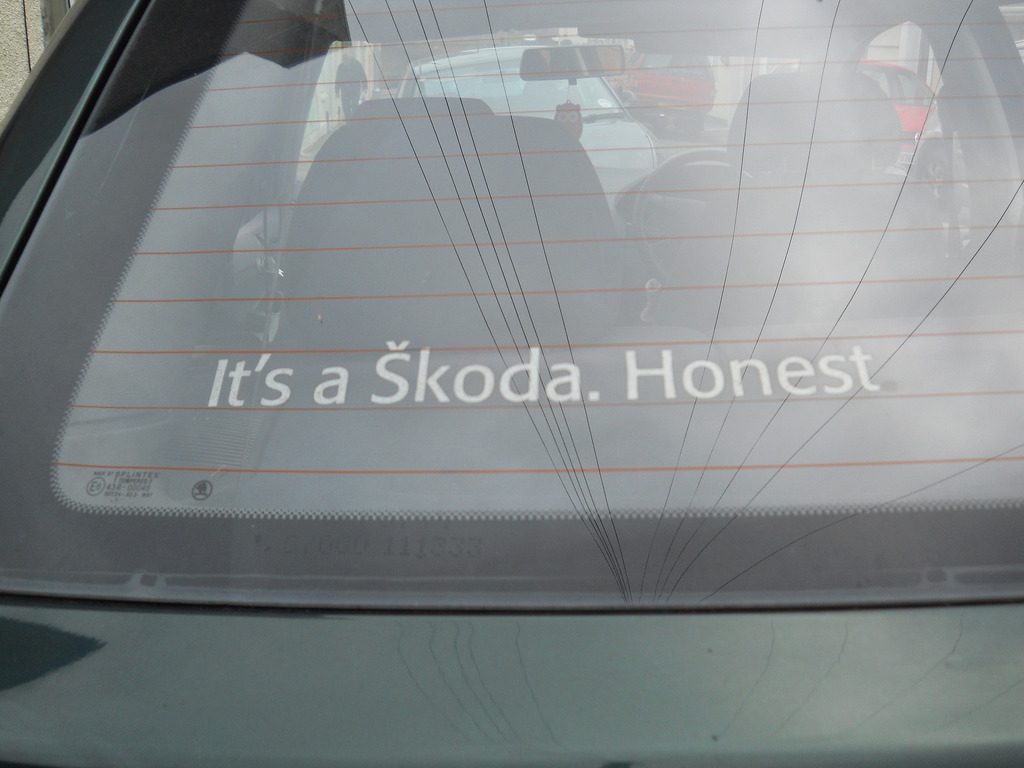
Look at the Czech auto manufacturer Skoda. The brand built its reputation on being an affordable, reliable car but by repeatedly leaning on affordability in its marketing campaigns. This led to an unfortunate association that ended up damaging Skoda’s reputation. Over-emphasizing affordability led consumers to consumers using ‘affordable’ interchangeably with ‘cheap’. ‘Affordable’ has connotations of modesty or a manufacturer doing us a favor on the price, whereas ‘cheap’ implies poor quality, cut corners and substandard materials or workmanship. Skoda bore the damage to its brand’s reputation with quiet dignity until a marketing masterstroke came in 2001 with it’s “it’s a Skoda… honest” campaign. Rather than shy away from the fact that its product had become an industry joke, the brand confronted and deconstructed it, refuting allegations of poor product quality and giving its cars a sexy new makeover. Skoda’s marketing now leans on the product’s reliability and quality of its workmanship in spite of its affordable price. Very little about the cars has changed outside of the brand’s public perception.
Mistake 2- Forgetting that EVERYTHING you and your employees do affects your brand
One of the most egregious mistakes a business can make is treating its brand and its business operations as separate entities. Your brand is more than just your logo, your slogan and your advertising campaign. It’s everything you and your employees do. Every time a member of your staff puts a customer on hold for over a minute, every time a customer is overcharged, every time a member of staff forgets to apologize when a customer makes a complaint… that’s all your brand. Your bug riddles app is your brand. Your confusing and hard to navigate website is your brand, your messy desk is your brand and your unkempt appearance is your brand.
Needless to say, all employees and colleagues need to understand the importance of the brand to you (and how important it should be to them). And, obviously, this all applies to everything you do too!
You and your employees should all be ambassadors for your brand, reflecting their core principles in everything they do. Which brings us to…
Mistake 3- Failing to align your brand with your core principles (or your consumers’ needs)
If your brand is a microcosm of everything you do, it’s vitally important that it represents the core values and principles that underpin your day-to-day operations. If you’re at all unsure of what these are then you should lock them down as quickly as possible or run the risk of having a disparity in your branding that could alienate your customers. Your core values should be the DNA that permeates everything from your logo to your content marketing strategy. This is relevant to huge multinational corporations as much as it is to small independent businesses. Take a look at ABC Home and Commercial Services’ website for example. It’s a modest website that’s free of flashy gimmicks, yet it makes upfront and transparent claims reflect its ethos of reliability and ethical conscience. When a consumer’s toilet breaks or their feeder pipe starts leaking, these are the exact qualities that they’re going to be looking for.

Mistake 4- Assuming brand loyalty
Brand loyalty is dead, my friend! It’s a bygone product of a simpler time. A time when all a brand had to do was live up to its claims. Today’s market is oversaturated with identical products making identical claims that are interchangeable in all but packaging. While customers may consistently favor one brand over its competitors, it’s likely to be accidental or borne of necessity rather than an emotional attachment to that brand.
If you want your customers’ loyalty, you’re going to have to earn it. Fortunately, the digital marketplace allows you plenty of opportunities to do exactly that. Take a look at the way Uber incentivize their customers to introduce their family and friends to the service by offering both parties money off their next (or first ride). Consider also the Starbucks app; a work of twisted marketing genius. The Starbucks app allows customers to ‘conveniently’ load credit onto the app itself, thereby securing a financial commitment greater in value than customers would probably spend in any single transaction. For every drink or item purchased the customer is rewarded with a star graphic that is saved in a digital rendering of a Starbucks branded coffee cup on the app. When a customer saves up 15 stars they get a free drink. At a price of $5.88 per latte, that’s a commitment of $88.20 from the customer for a reward that costs Starbucks around 30 cents.
Do customers feel short changed by this transaction? Far from it! Because they’ve been given an emotionally driven feeling of getting a good deal. That’s the power of branding!
Mistake 5- Operating in a bubble
You should absolutely be inward facing in your business practices, but it’s important not to operate in a bubble. Focusing only on yourself at the expense of your relationship with other brands and businesses can only impose limitations on your reach. Fortunately, the solutions to this are easy and enjoyable to implement.
Co-branding is a great way of aligning your business goals with those of another brand; working together on a project that’s mutually advantageous to both parties. You also have the pleasant side-effect of piggybacking on each other’s reputation, prestige and customer base. History has shown us many great examples of this. Take GoPro’s alignment with Red Bull or Bonne Belle’s partnership with Dr. Pepper to make flavored lip balm.
Your brand can make or break your business, but by appreciating and understanding its significance and implementing these 5 safeguards you can ensure the strength of your brand and your business for years to come.








Very helpful! thank you for the Blog Commenting Sites list, it is very helpful, I was searching for some valuable links. Good work, and keep sharing your research and knowledge. Thank you again. This post really too helpful for me to do blog commenting. Thank you for sharing. I am waiting for your next article……